
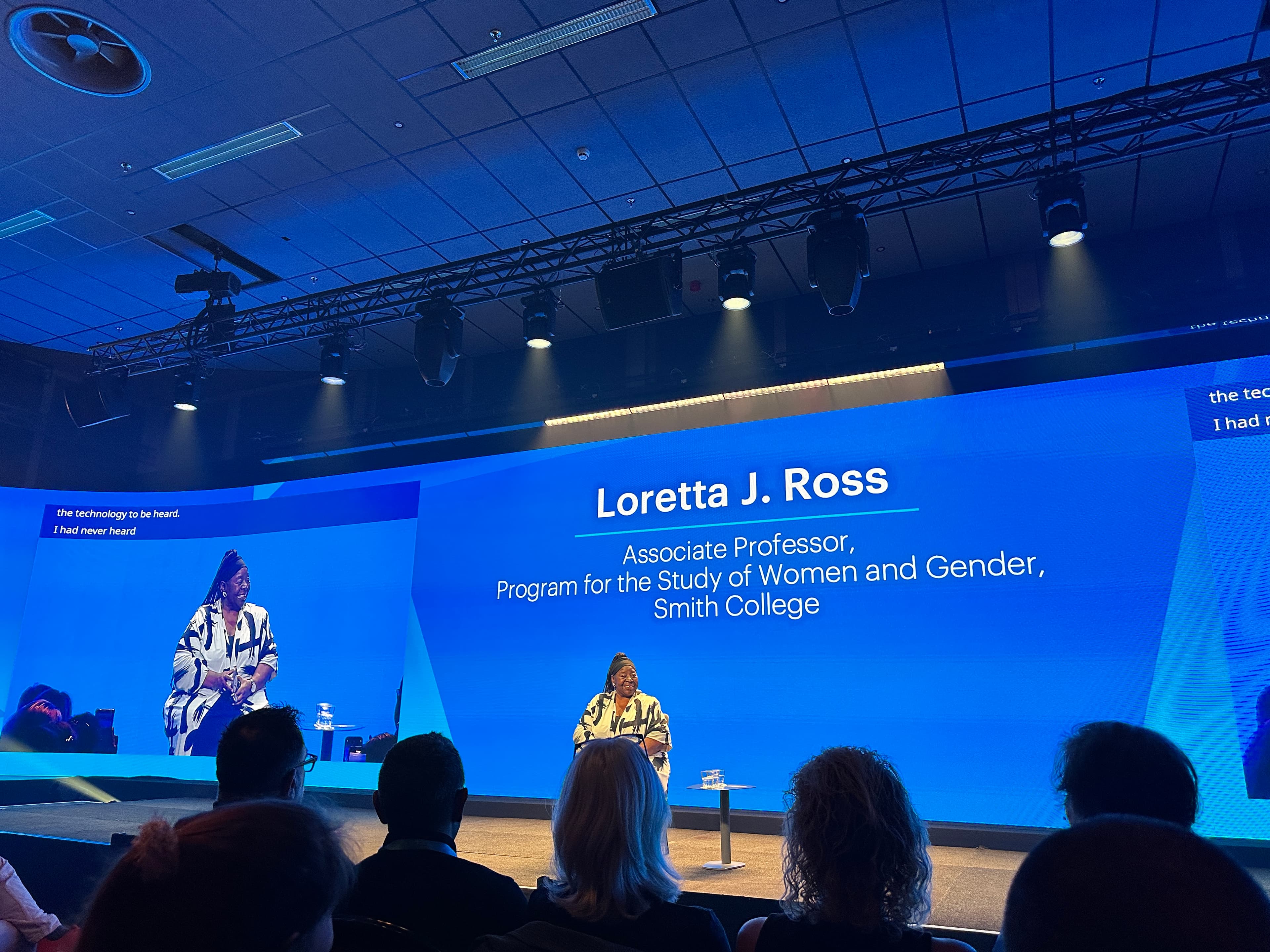

I recently had the privilege of attending the International Fundraising Congress (IFC) in Amsterdam this October. As one of the biggest fundraising conventions in Europe, it brings together an incredible community of charities, changemakers, and innovators. Over 4,000 people joined from 150 countries and more than 100 organisations, all focused on one powerful goal - creating positive change in the world.
The overarching theme of the conference was Breakthrough: how do we challenge our current perspectives, do things differently, and fundamentally invoke the change the world desperately needs? This question set the tone for three days of challenging conversations and new ideas.
The five C’s: A new human rights movement
The scene was powerfully set by academic and activist Dr. Loretta Ross, whose work has long been dedicated to advocating for women’s rights and reproductive justice. Loretta laid out a vision for a new human rights movement founded on her Five C’s framework—a practical guide for handling conflict without immediately defaulting to cancel culture.
The framework moves through Calling Out, Cancellation, Calling In, Calling On, and Calling it Off. Dr. Ross spoke about the crucial shift in perspective required -challenging our own views and acknowledging genuine differences in opinions to move forward constructively. This idea of inviting conversation, even when difficult, rather than simply shaming, became a powerful opening for the conference.
My 5 key takeaways
The discussions, plenaries, and breakout sessions provided a wealth of knowledge, but five core themes stood out to me for the direction of the sector:
1. Embracing a global narrative
As a UK-based organisation, we rightly focus on our predominantly UK-based client challenges. However, attending IFC cemented that we are operating within a much broader, global context. The complex challenges our clients face—from political instability to economic uncertainty—are felt by organisations across the world and it’s something we can learn from within the context we operate in. It was insightful to see groups from multiple countries discussing similar core issues. To provide truly effective support, we must remain acutely aware of the wider world our partners operate in.
2. Mobilisation in a crisis requires innovation
This global awareness leads directly to the second point: understanding fundraising and mobilisation in a crisis. When clients are navigating complex global issues like war, natural disasters, or tricky political environments, traditional fundraising techniques often aren't available.
How do you raise money when banking systems have collapsed, making traditional money exchanges impossible? We must be innovative and meet our clients where they are, understanding the nuances at play. This means being ready to pivot rapidly and providing alternative, creative pathways for supporters to provide impact.
3. Reaffirming AI as a helper, not a fixer
AI was a huge topic, but the message was clear: it is a helper, not a fix all. AI will not replace the fundamental need for teams to define their goals and strategies. What it can do is spot critical gaps, provide data-driven insights, and crucially, scale pre-defined plans.
I loved the idea of using AI like an intern you want to set up for success: don't expect it to have all the answers right away. Instead, invest the time upfront to map workflows, ensure it has high-quality data and information, and spend time designing the solution before you start using the tool.
4. Agility for growth in uncertainty
The last few years have been challenging, and the effects are hitting our clients hard. The conference pushed us to consider how to turn these tough times into opportunities for growth. This involves embracing disruptive communications to reach new audiences and leveraging data for more impactful storytelling.
A fascinating point was the need for charities to think of themselves as a commercial brand—understanding what resonates with the audience they want to attract, rather than just viewing them as a potential donor.
5. Systems are broken, not people
This was perhaps the biggest and most inspiring takeaway. People working in the 'for good' sector are passionately dedicated to making a positive impact. However, the systems—from unpredictable government funding to inadequate infrastructure—are often broken and fail to support these missions. This reality isn't leading to burnout; it’s driving people to find alternative ways and innovative solutions.
Organisations are taking risks and diversifying support beyond just financial giving, focusing on community building and resilience.
This was exemplified in the closing plenary by Brave Mhonie, General Manager of SunnyMoney Malawi, an organisation providing solar light access. He shared his vision to provide light to everyone as a basic necessity, noting that the barrier wasn't passion, but broken infrastructure. To solve this, he secured investment to fix the infrastructure and empower communities to start small businesses selling the lights, solving a basic human right while also creating local income generation.
The lesson for us is to help our partners think radically outside the box, thoughtfully integrate technology, understand their audiences, and shape how they achieve broader reach and deeper impact.
The IFC conference was an incredible moment to pause, reflect, and gather the tools needed for the "breakthrough" that lies ahead. We've got work to do, but the energy and intelligence of this global community are truly unstoppable.
Our new whitepaper explores some of the engagement challenges facing the sector as well as solutions and actions non profits can take, read it here:
Mind the Engagement Gap:How to deliver experiences that deepen the charity supporter relationship