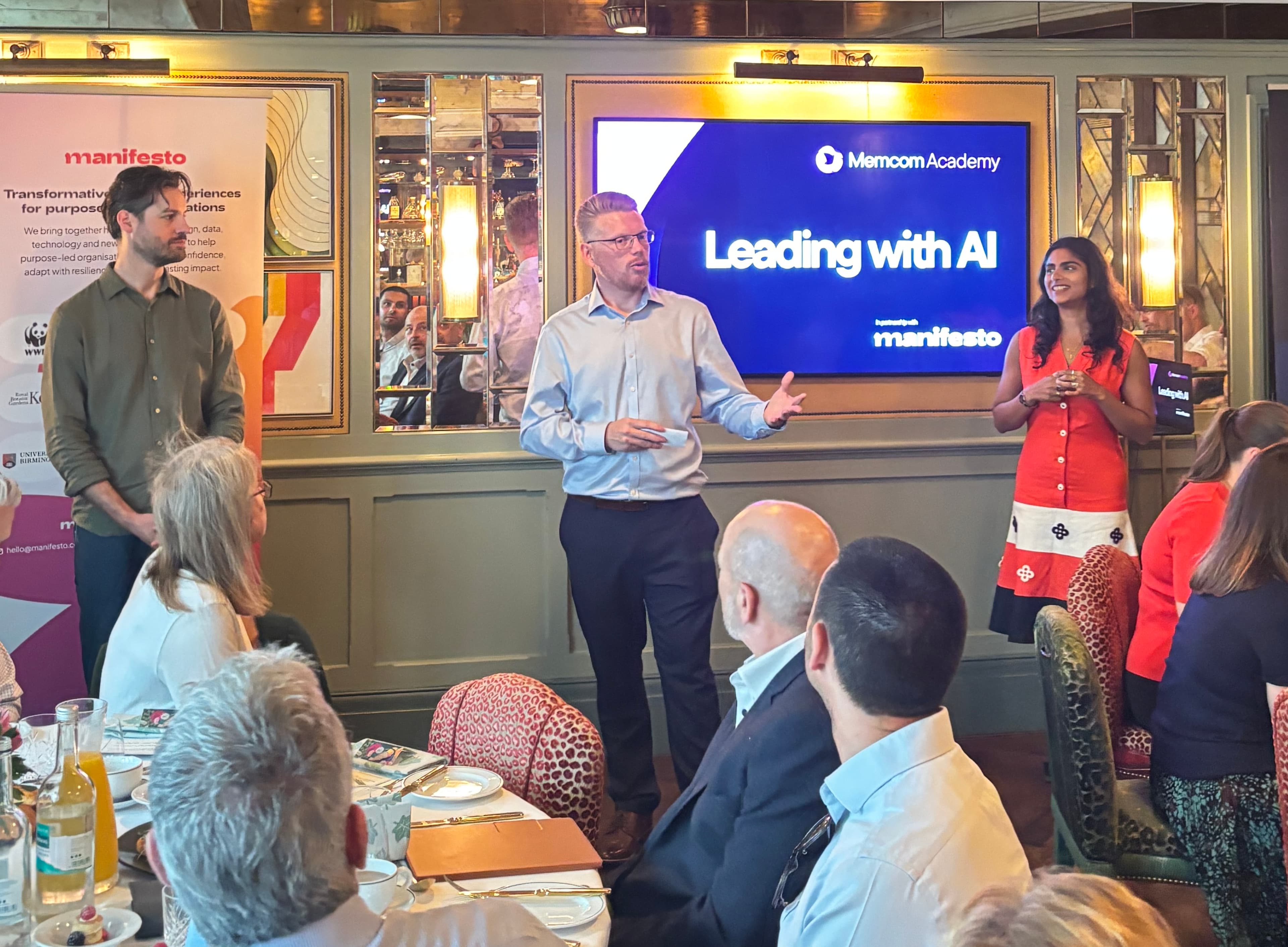

We recently co-hosted a lively roundtable with members of Memcom, an organisation supporting senior leaders and C-suite in the professional bodies, trade associations, and wider membership sector. We explored the topic of the month and year - AI. How these membership organisations are approaching it, what they are finding challenging, where they are seeing success to build on and inspiration for future applications. Here are some key takeaways from the event.
Why leading with AI feels hard
AI is supposed to make everything easier. In practice, it often feels like the opposite. In the session we named why:
- It has happened extraordinarily fast.
- It touches everything in your organisation at once.
- It promises instant productivity – and rarely delivers it on day one.
- It's an ethical minefield.
- Right now, it's genuinely hard to prove whether it's working.
But we've been here before. Every major technology shift – from the personal computer onwards – has dipped short-term productivity before delivering long-term gains. As Robert Solow observed of computing in 1987: “you can see the computer age everywhere except in the productivity statistics”.
Today's version of that paradox is the widely reported finding that around 95% of generative AI pilots are failing to deliver measurable returns (MIT, reported by Fortune).
The J-curve: the dip we’ve seen before
Performance typically dips during a period of transition before rising to a new, higher, sustainable level. Three lines matter here:
- What stakeholders mistakenly expect – a smooth and rapid rise.
- What actually happens most of the time – a performance dip before any benefit appears.
- What's possible with sound change management – a shallower dip and a faster climb to a better state.
And while adoption is no easy task, organisations are finding ways to move forward. Among charities, ‘active’ AI use rose from 23% to 34% between 2025 and 2026, and ‘strategic’ use saw a small increase from 2% to 4% (Charity Digital Skills Report).
The tensions membership professionals are leading through
There are no easy resolutions to these tensions. But naming and describing them clearly is how you start.
-
Mission vs. tech. You're told to start from the mission, not the technology. But knowing what AI could do for the mission means understanding the tech well enough to know what's possible.
-
Which foundations first? It's hard to know which AI foundations to invest in until you've tried to build on them, yet you can't build on them credibly until you know they're strong enough.
-
Pilots vs. evidence. Weak foundations lead to small pilots, which only produce limited evidence that AI can be transformative. But bigger investment needs evidence of transformation, which only larger experiments and more time can produce.
-
New opportunity vs. familiar work. AI is a fresh chance to solve the 'forever problems' in your organisation. But it still relies on familiar inputs: your content strategy, data pipelines, user-centred design, service design thinking and so on.
-
Falling behind vs. moving too fast. There's anxiety about being left behind if you don't act now, and an equal anxiety about moving so fast that a mistake damages your reputation or loses your teams' trust.
Starting from a place of awareness about these tensions is what helps you work out what leading with AI looks like for you.
A framework for leading through tensions
The group activity used a simple three-step model for working through any AI opportunity:
-
Set the intent: where do you hope AI can make things better, and where have you already tried? Start from a real use case and process (for example, categorising member queries).
-
Map the conditions: reframe the tension honestly. Using AI to manage queries may serve members better, but it means their data is processed through AI. What has to be true for that to be acceptable?
-
Make things happen: hypothesise and experiment, favouring low-risk, high-reward moves (for example, identifying which data is safe to process using AI).
What the Memcom groups explored
Where AI could add value. Across the room, groups identified practical, largely low-risk entry points for membership organisations:
- First-pass analysis of membership applications
- Categorising and managing member queries
- Automated meeting notes
- Speeding up translations and processing
- Expedited cataloguing for the library team
- Mapping and automating business processes
- Member-facing content digests
Two engines of adoption and the need to run both. A recurring theme was that healthy adoption comes from the top and the bottom at the same time.
Top-down scaffolding – the structure leadership provides:
- A clear organisational intent for AI
- Training, and practical prompt skills
- Safe-usage guidelines, with clear GDPR and governance
- Codifying learnings so they're shared, not siloed
- Clear objectives, and incentives for staff to meet them
- Steering groups, and cascading intent across the organisation regularly, not as a one-off announcement
Bottom-up innovation – the momentum from people experimenting in their own work:
- Individuals demonstrating efficiencies in their own workflows
- Evidence that objectives are being met
- Moving from pilot to outcome-focused work
- A test-and-learn culture, working in the open
- Mapping how AI is already being used across the organisation, formally and informally
- One condition underpins everything: understand where your people actually are with the technology. Trust, perceptions and comfort with the technology vary widely across any organisation. Adoption has to start from an accurate baseline, so surveying internal perceptions should come before any change initiative.
Bringing it all together: a full-stack approach
Implementing AI well is a holistic, long-term effort. Like any change journey, it's about people, process and technology, at every level of the organisation:
-
Organisation and culture: your AI intent (the 'why' behind implementation); governance (policies, principles, ethics, risk management); data standards and practices; digital infrastructure and tooling; learning and development; hiring; ways of working; and capability management.
-
Teams: turning individual capability into shared workflows, agreed best practice, and better products and services.
-
Individuals: access to tools, the right mindsets and behaviours, individual workflow efficiencies, compliance with policies, and on-the-job learning.
The engine that connects all three levels is the AI learning loop:
- Set or renew your organisational intent, and establish guardrails.
- Provide AI tooling and licences.
- Run experiments to test what works within current constraints.
- Scale what works; stop what doesn't.
- Identify where stronger foundations are needed to tackle bigger problems – then loop again.
The principle underneath it all: prioritise building the intangible skills. AI readiness is a byproduct of doing.
Next steps in your AI journey
In the short term:
Play an active role in creating AI learning loops. Choose low-risk, high-reward experiments and start now.
In the longer term:
-
Sustain a strategic, full-stack approach to AI implementation.
-
Reframe the challenge internally as a holistic, long-term effort, not a quick win. You are likely to see the J-Curve when tracking performance.
-
Engage directly with initiatives to build AI confidence and capability across your teams.
-
Invest in digital infrastructure to build stronger foundations.
If you haven't started yet, the first move is simple: set or renew your organisational intent with AI, establish your guardrails, and give one team the tooling to run a first experiment.
Making it happen
From innovation sprints and prompt training to AI search and AI strategy & roadmaps, we help organisations move forward on their AI journey — wherever they're starting from.
Not sure where to start? Take our quiz.
Benchmark your organisation's AI journey
Where does your organisation sit on the road to responsible AI? Take this quick 8-question self-check to evaluate your current readiness, see where you stand on the roadmap, and discover exactly what to focus on next.
Ready for a strategy? Get your roadmap in 10 weeks.
Get the AI strategy and roadmap your board will back — in 10 weeks. Manifesto's AI Wayfinder helps you move from scattered AI activity to a clear, actionable plan that scales impact, working alongside our senior digital strategists.
Read next
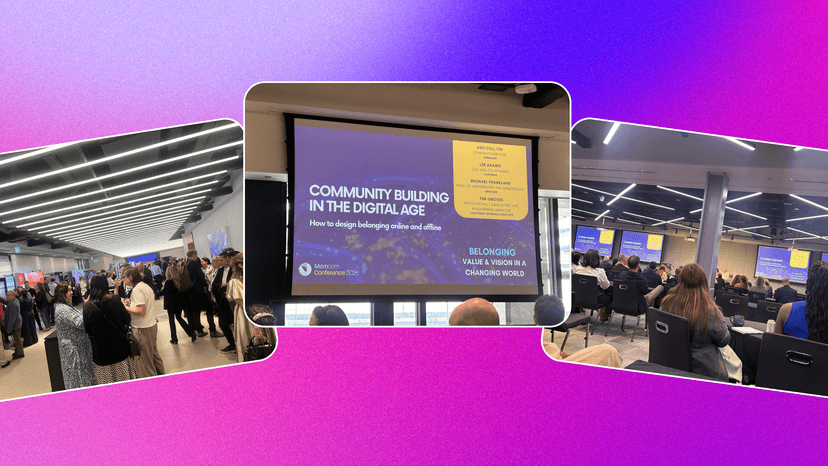
Normal or novel? Navigating the future of membership organisations
by Aarushi Kumar04/06/2026MembershipKey insights on belonging, value, and transformation from Memcom 2026.
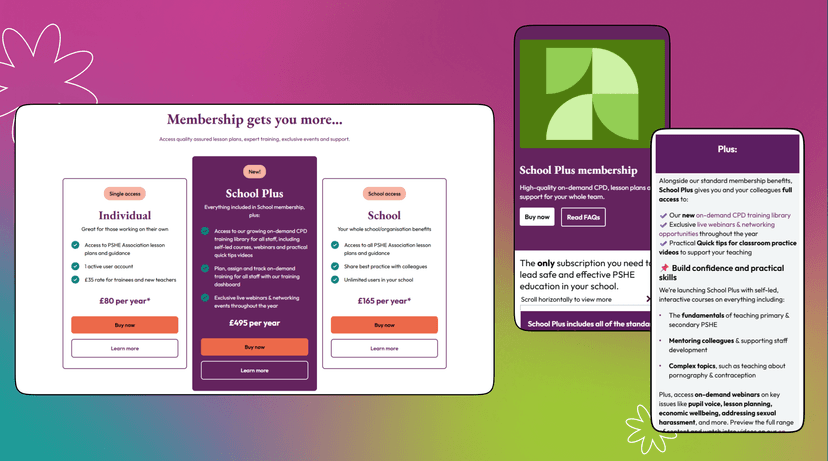
Building a flexible membership experience with engagement at its core
with PSHE AssociationMembershipExperienceWe partnered with PSHE Association to enhance their online membership by introducing a new "School Plus" tier and improving tools for tracking user progress

Responsible AI strategy and roadmap for a vital cancer research and support charity
with Blood Cancer UKFrom uncertainty to actionable AI adoption strategy - a practical AI roadmap to scale mission impact