
Advertising has arrived inside ChatGPT. After launching in the US earlier this year, OpenAI has recently launched its ad pilot to the UK: sponsored placements that sit beneath ChatGPT's answers. For a sector that spends carefully and watches new channels closely, it's a moment worth understanding properly rather than reacting to.
Yes, this is a genuinely new and exciting opportunity, and yes, it matters. But before anyone redraws a media plan around it, there's one detail that changes the entire conversation for higher education: ChatGPT ads can't be shown to under-18s.
The under-18 ceiling
During the pilot, OpenAI does not show ads to accounts it is told (or predicts) belong to someone under 18. For most consumer brands, that's a footnote. For undergraduate recruitment, it's the headline. A large share of your core UG prospects are 16 to 18: sixth-formers and college students researching where to study. They are, by design, the audience this channel cannot reach, which fundamentally disrupts traditional prospectus journey optimisation.
Rather than a constraint, for me this reveals the platform’s genuine value as a high-intent channel for postgraduate, mature, and international audiences in markets where OpenAI ads are live.
Who you can reach with ChatGPT ads
Reachable today, in principle:
-
Postgraduate prospects, who are overwhelmingly 18+
-
Clearing applicants aged 18 or over (though ChatGPT might ‘guess’ they are 18 if it doesn’t know otherwise for sure)
-
CPD, executive education and professional learners
-
Mature students
-
Parents, carers and other influencers researching on a prospect's behalf
-
International audiences, as the pilot widens market by market
Worth noting alongside this: targeting is contextual, not demographic. ChatGPT matches ads to the topic of a conversation, a user's past chats and their past reactions to ads. There is no demographic targeting, no audience segmentation, and advertisers don't receive personal data or conversation content. Ads won't appear near sensitive or regulated topics such as health, mental health or politics (not sure how that’s being classified yet!), which butts-heads directly with clearing stress, wellbeing and student finance, some of the most emotionally charged moments in the whole student experience design.
The honest status of the channel
Be wary of anyone selling a finished ChatGPT ads strategy for UK higher education today. The pilot is only weeks old here, and there's no body of sector results to learn from yet. This is a test-and-learn space, not a proven channel. As an experienced Higher Education digital transformation agency, our sensible posture is to treat any budget as explicitly experimental and ring-fenced from the channels you already know deliver, not reallocated from them.
Before you think about paid, ask what AI already says about you
Here's the part that's genuinely actionable right now. ChatGPT decides which ads to show based on the topic of a conversation, so the relevance of any future placement depends on AI understanding your institution and your subjects in the first place. And long before a student sees an ad, they're already asking ChatGPT questions like "best UK universities for X" and acting on the answer.
So the first question isn't "should we advertise on ChatGPT?" It's "what does ChatGPT already say about us, and is it right?"
This is where the work is available and provable today. Generative engine optimisation (getting your institution accurately represented and well-positioned in AI answers) is a critical pillar of a modern university digital strategy. It is something we can audit and act on now, and we have the results to show for it.
ChatGPT advertising, by contrast, is something we'd be glad to help you test as the UK pilot matures, but we'd be honest that, for everyone in this space, it's early and unproven. We'd rather earn a place in your ad budget by first proving the readiness work underneath it.
Try this before your next marketing stand-up: ask ChatGPT your five highest-value course questions, screenshot the answers, and compare them to two or three competitors. It's the fastest way to turn an abstract debate about a new channel into a concrete conversation about where you actually stand.
It's just another channel - so treat it like one
Step back, and ChatGPT ads are exactly that: another channel. A new and interesting one, but one slice of a journey that runs from a prospect's first AI query, through prospectus journey optimisation, enquiry, application, offer and enrolment, and on into the student experience and digital strategy itself.
The institutions that win the next few years won't be the ones who bought the newest placement first. They'll be the ones who joined media, content, search, GEO, CRM and student experience design into a single, coherent journey, and knew exactly where a channel like this fits within it.
That's the conversation worth starting internally now. Get your media, content, admissions and student-experience leads in one room and ask two questions: which of our audiences can this channel even reach, and is the next step in their journey ready for them when they arrive?
If you'd like to know what AI is already saying about your institution, an AI-visibility review is where we'd start. Get in touch: [email protected]
Read next

Dear Higher Education digital leaders: charities and museums have something important to tell you
by Hugh James08/04/2026What Higher Education can learn about engagement from research with over 400 leaders in the cultural and charity sectors.
Responsible AI strategy and roadmap for a vital cancer research and support charity
with Blood Cancer UKFrom uncertainty to actionable AI adoption strategy - a practical AI roadmap to scale mission impact
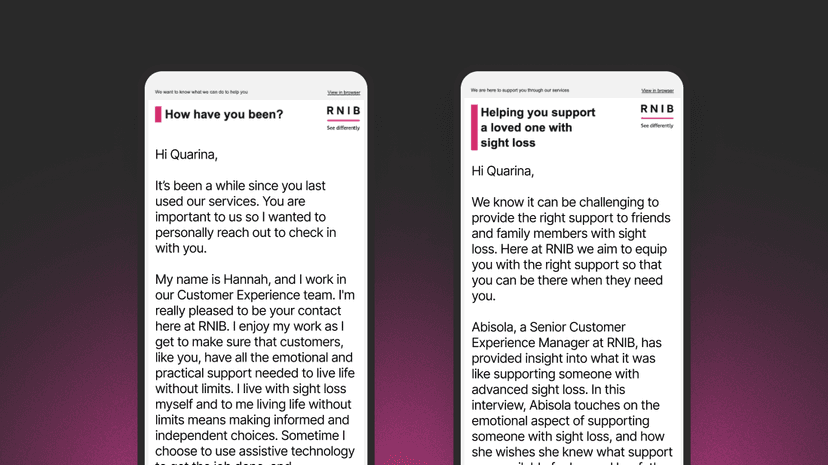
Turning service users into engaged donors with data-driven personalisation
with RNIBCharitymanifesto partnered with RNIB to transform their customer journey, turning service users into engaged donors.