

Many charities have strong campaign ideas and passionate teams. But turning those ideas into meaningful supporter experiences is often met with challenges.
At a recent Acquia Customer User Group webinar, speakers from Manifesto and Trussell explored why charities struggle to deliver joined-up engagement - and what organisations can do to close the growing supporter engagement gap.
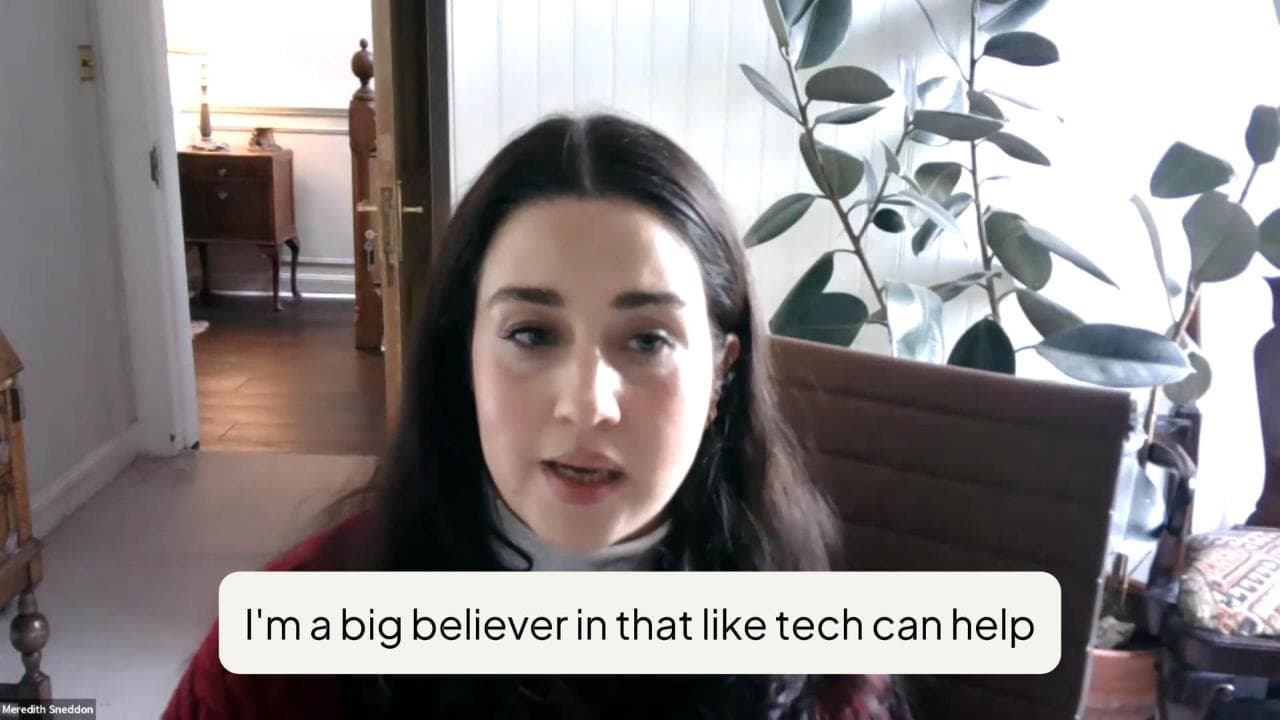
The session brought together Lou Barton, Principal Consultant for Customer Experience and Engagement at Manifesto, Stephi Harding, Senior Engagement Strategist at Manifesto, and Meredith Sneddon, Head of Systems at Trussell. Hosted by John Maden, Customer Success Manager at Acquia, the webinar drew on research with 300 charities and 2,000 supporters, and lived experiences to explore how organisations can better align teams, technology and audience needs.
Watch the full webinar (49 mins) on YouTube
The supporter engagement gap: why organisations struggle to deliver joined-up experiences
Opening the session, John Maden set the scene by describing a situation familiar to many charity teams.
“Many of you will have been in situations where your team has a brilliant idea for a campaign,” he said. “The mission is urgent, the passion is high, but then you hit a wall.”
Those barriers often stem from systems and processes that make it difficult to execute ideas effectively.
“Maybe it’s your CRM that won’t talk to your email platform, or your internal approval process is too difficult to navigate, or your data is so siloed that you can’t see the person behind the donation.”
These kinds of challenges can prevent organisations from delivering impactful, seamless experiences across channels, and ultimately limit their ability to engage supporters effectively.
Why technology alone won’t fix engagement
During the session, Lou Barton explained that while technology plays a role, the problem is rarely just about tools.
Instead, many organisations face a broader challenge around how teams, processes and data work together.
Research suggests charities can often operate in structures where teams focus heavily on their own deliverables or departmental priorities, which can make collaboration more difficult.
As Barton noted, this can lead to situations where organisations miss opportunities to better serve audiences.
When teams operate in silos, the result is often fragmented supporter journeys and disconnected experiences.
Lessons from Trussell: aligning teams, data and systems
Providing a practical perspective, Meredith Sneddon of Trussell shared how these challenges have appeared within the organisation’s own work.
Trussell is a UK charity that provides emergency food and support to people facing hardship. As the organisation has grown, ensuring alignment across teams has become increasingly important.
One of the biggest challenges, Meredith explained, was the way different teams measured success.
“The KPIs were a big thing for us,” she said. “If you spoke to different teams - even within our individual giving team - there would be completely different KPIs that they were tracking, and none of which were aligned to any kind of more strategic outcome that we were moving towards as an organisation.”
This lack of alignment made it difficult to create a shared understanding of what success looked like - or how teams were contributing to the wider mission.
How too many KPIs can create confusion
Meredith also described how an over-reliance on metrics can sometimes make it harder for organisations to understand what is actually driving impact.
“I remember sitting in an income review meeting and we were looking at over 30 different KPIs to measure the health of the fundraising programme,” she said.
“And I was just like, this is not helpful. This is not building us a clear picture, and it’s not going to be helping our audiences.”
The organisation began to rethink how it approached measurement, focusing on simplifying priorities and ensuring metrics were directly connected to strategic goals.
“We started thinking about what actually are our priority KPIs,” Meredith explained. “If we have this income line that we’re trying to deliver, what’s the next layer down in terms of priority?”
Shifting towards audience-centred engagement
One of the most important changes at Trussell was a shift in mindset - moving away from purely performance-driven thinking towards a stronger focus on the audience.
Instead of looking at engagement purely through metrics, teams began reframing their work around the value they were providing to supporters.
“We started seeing it much more as a value exchange with audiences rather than just KPIs,” Meredith said.
“That has been really crucial for us and definitely helped shift the dial.”
Interestingly, Meredith noted that focusing less directly on KPIs actually helped improve performance.
“It helps improve the KPIs by not talking about the KPIs,” she said. “Which feels like a really weird way of doing it, but just seeing it more as a value exchange with audiences has really helped us.”
Meredith’s top tips for improving charity engagement
Drawing on her experience at Trussell, Meredith shared several lessons that may help other charities facing similar challenges.
Align teams around shared outcomes
When teams measure success in different ways, collaboration becomes much harder. Creating shared organisational goals can help teams work together more effectively.
Simplify performance metrics
Too many metrics can create confusion and obscure what really matters. Reducing the number of KPIs helps teams focus on meaningful outcomes.
Connect KPIs to strategic priorities
Metrics should clearly link to organisational goals. At Trussell, KPIs were only retained if they directly supported priority outcomes.
Focus on value for the audience
Rather than viewing engagement purely through performance metrics, organisations should think about the value they provide to supporters and communities.
Encourage cross-team collaboration
Breaking down silos between fundraising, digital and marketing teams can help organisations deliver more coherent supporter journeys.
Closing the engagement gap
The webinar concluded with a clear message: improving engagement requires organisations to look beyond technology and examine how teams, processes and data work together.
By aligning internal priorities, simplifying measurement and focusing more clearly on supporter value, charities can begin to close the engagement gap.
As the speakers emphasised throughout the session, meaningful engagement starts not with systems or campaigns - but with a deeper understanding of the people charities exist to serve.
Read Manifesto's full whitepaper Mind the Engagement Gap: How to deliver that deepen the charity supporter relationship