
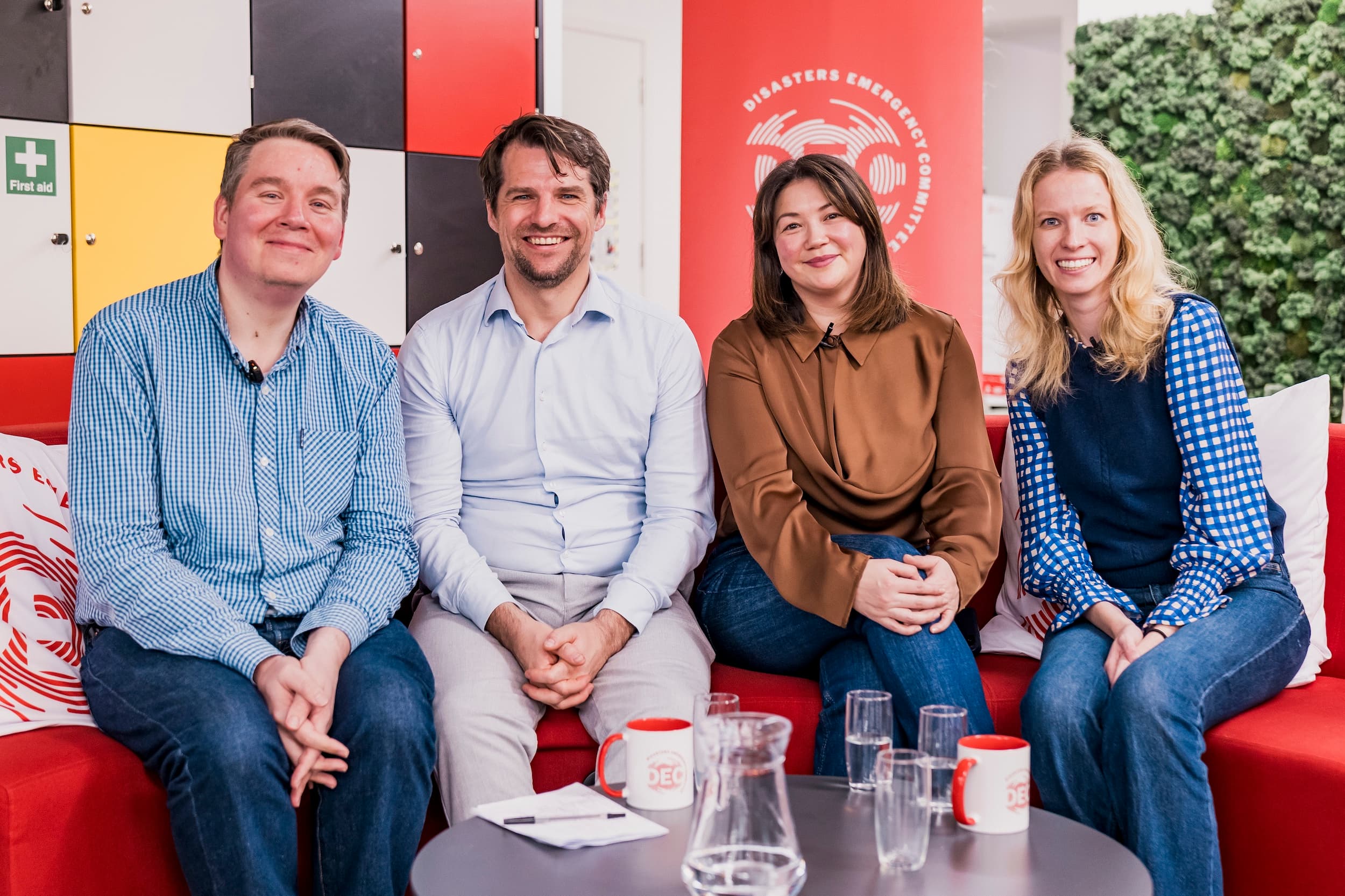

I recently had the pleasure of joining the Disasters Emergency Committee's (DEC) AI Inspiration Day; an event Manifesto co-created; and sitting on what turned out to be a genuinely brilliant panel. But the question we were really there to answer wasn't the one most people walked in expecting.
After a morning of eye-opening examples of AI in action, from large-scale international deployments to experimental, impactful local nonprofit projects, it became clear we weren't there to ask "What can AI do?" We were there to ask "What should AI do?"
In a sector where 78% of charities see AI as relevant, yet 73% don't feel ready to respond effectively (Early 2026 findings from the Charity Skills Gap Report), most leadership teams are stuck somewhere in the gap between hype and genuine utility. And honestly, that's the most interesting place to be right now.
As we say at Manifesto: AI is not a separate conversation. It's most powerful when embedded holistically across an organisation's systems, people, and processes - creating capacity for higher-value human contribution. It's Humans + AI, not the other way around.
Moving from paralysis to transformation requires a real shift in how we think about our people, our data, and our mission.
Here's what I took away from the day:
1. Make the strategic bet - and back it
The transformational promise of AI is real. We're heading towards a future where technology fundamentally changes how organisations work, make decisions, and deliver services. But let's be honest, today's AI gains are more modest. They're still valuable, but they're not the transformation moment yet.
That's why I frame this as a strategic bet. A bet that AI will become more reliable and its transformative potential will be realised, and that the organisations best placed to harness that transformation will be those with AI already embedded in how they work.
But winning that bet isn't just about investing in AI tools. It's about building a modern organisation that's fit for a modern, digital era. That requires three things working together:
-
Systems thinking and agility - the ability to adapt as the technology and your needs evolve
-
Useful, measurable data over siloed tech - connected information you can actually act on
-
Psychological safety - a culture that fosters curiosity and can handle uncertainty without freezing
The goal right now isn't to wait for the perfect moment. It's to build practical AI experience, strengthen your data foundations, and develop the confidence and capability to move decisively when AI matures. The organisations that win won't be the ones who planned or spent the most - they'll be the ones who started experimenting, safely and ethically - aligning it directly with their mission and outcomes.
2. Bet on "human magic"
And what are we really trying to free up with all of this? People. Our goal should be liberating our teams, our wonderful fundraisers to fundraise - not to spend their days buried in admin and forms.
There's real urgency here. We know that 44% of supporters don't typically engage after their first donation (Manifesto). That's a retention leak that manual processes consistently fail to patch. AI can help us anticipate supporter needs, personalise journeys, and close that engagement gap. More importantly, it gives our teams the space to do the things technology can never do: build relationships, tell stories, and show up for people in moments that matter.
Hyper-personalisation has been a goal in this sector for years. AI finally makes it achievable - by connecting systems, putting data in the hands of our teams, our fundraisers, marketers, service delivery teams and letting them orchestrate experiences that actually feel personal, relevant and timely.
3. Step out of the shadows
Here's something we need to stop dancing around: Shadow AI is already here. 71% of UK employees (Microsoft/Censuswide, October 2025) have used AI tools at work without any approval. When leaders don't provide a clear framework, people will just… do stuff. And you can't blame them.
As leaders, our job is to show, not just tell. That requires a bit of vulnerability - standing up and saying, "I don't know every technical detail, but here's how I'm experimenting." When we're transparent about our own learning curves, we create the psychological safety for our teams to step out of the shadows and innovate in ways that are actually safe and strategic.
This isn't just a cultural conversation. It's risk mitigation. With 46% of charity leaders (Manifesto) already seeing AI being misused internally, creating "sandbox" environments for safe, low-stakes testing isn't a nice-to-have, it's essential.
4. Get the fundamentals right first
Just because we can automate something doesn't mean we should. AI is not a magic bullet, it amplifies the importance of things the sector has been talking about for years: good data governance, clear content strategy, user-centric design, and solid information architecture.
I love this framing: if ChatGPT can't find what it needs on your website, neither will your supporters. That makes the abstract idea of searchability and content quality very concrete, very quickly. According to Gartner, traditional search volume is set to drop by 25% this year as users pivot to AI 'answer engines.' This isn't just a tech trend; it’s a generational takeover. BigCommerce research shows that 61% of Gen Z now prefer ChatGPT over Google. For charities, the stakes are even higher: while the sector has seen a 28.9% drop in search visibility since the rise of AI (Tank/NonProfit PRO).
And we have to be real about infrastructure. The energy and water demands of large data centres mean the planet is a stakeholder in every digital decision we make. You cannot build a sustainable future on a spaghetti stack of outdated or incompatible systems, a challenge that 23% of the sector is currently wrestling with.
5. Close the Confidence Gap
The so-called "Readiness Gap" in the charity sector is real, but I think it's actually a Confidence Gap in disguise. Fear of change and technology causes paralysis. And it doesn't help when information isn't contextualised with a real, measurable use case. True transformation requires rewiring our organisations for a genuinely multi-generational workforce. Creating a learning environment where someone who started their career long before computers were on every desk can thrive right alongside an AI native.
We're just as focused on building confidence as we are on building skills. Levelling the playing field of AI literacy across your organisation isn't a one-off training day. It's an ongoing commitment. And it starts at the top.
Where to start with AI: A practical path forward
We're no longer in the hype cycle. We're in the doing cycle. So if you're ready to move from wondering to acting, here's a framework we use with organisations to find their footing. You can work through these steps yourself, or if you'd like a structured approach, we offer our AI Wayfinder service, designed specifically to help purpose-led organisations identify where AI can increase impact and deliver a prioritised, actionable roadmap.
We'll share soon how Blood Cancer UK moved their AI journey from fragmented experimentation to strategic impact. Using our AI Wayfinder service, they developed a prioritised portfolio of opportunities and a practical, 6–24 month roadmap. This collaborative process didn’t just bridge departmental silos; it transformed AI into a "mission multiplier" by building internal literacy and establishing a clear, phased intent for long-term delivery.
Step 1: Orient and map your starting point
Before anything else, get honest about where you are. Align your leadership team around a common understanding of AI. Not technical expertise, just shared literacy and a clear-eyed view of your current state. Assess your tech, ethics, capabilities, culture, and data governance. Then talk to your people. Survey your teams. Map your value chain and look for the specific friction points where AI could offer the most relief. You're not looking for a grand vision yet, you're looking for the truth about today.
Step 2: Discover what's actually possible
Once you know your pain points, explore solutions with the people closest to them. Structured workshops with cross-functional teams - fundraising, services, operations — will surface a far richer longlist of ideas than any leadership away-day. The goal here is breadth: generate possibilities before you narrow down.
Step 3: Prioritise ruthlessly
Not all opportunities are equal. Distinguish between your "No Regrets" moves - high impact, low effort, do them now - and your "Big Bets" that need more groundwork. Cross-reference your opportunities against real-world problems, not hypothetical ones. Then translate your top priorities into a phased roadmap with real business cases, not just slides. Clarity on governance and next steps is what separates a strategy from a wish list.
Step 4: Structure your roadmap in waves - but start now
Think in three overlapping waves not a fixed, waterfall timeline, with the emphasis shifting over time:
-
Wave one is about empowering your staff and proving the concept - quick wins that demonstrate value and build confidence
-
Wave two shifts focus to improving how teams work together, streamlining processes across and within teams
-
Wave three and beyond is where service transformation becomes possible, as your evidence base and organisational AI maturity grows
All three waves run in parallel, but in wave one, the near-term wins are what build the momentum (and the trust) for everything that follows.
Keep coming back to these three questions
Before you invest in any tool:
-
What is our actual tech baseline?
-
Where is the real friction?
-
Are we solving a genuine problem or a hypothetical one?
Want to go deeper?
-
Watch the full talks: youtube.com/@manifesto.for.change
-
Manifesto Supporter Engagement Report — how to leverage your people and tech for supporter engagement
The organisations that will get the most from AI aren't the ones with the biggest budgets. They're the ones that are curious, honest about where they are, and willing to take one deliberate step forward.
Let's stop asking what AI can do, and start showing our audiences what a modern, engaged, and compassionate mission led organisation looks like in action.
Huge thanks to the brilliant speakers and everyone who made the day happen: James Michael Maltby of Save the Children UK's Humanitarian Leadership Academy, Suzy Madigan, Chioma Agwuegb of TechHerNG, Petya Kangalova of Humanitarian OpenStreetMap Team, Thomas Copeland of BBC News Verify, Natasha Tierney, and host Simon Beresford of Disasters Emergency Committee. And a special shout-out to Olivia-Jane Hepworth Nelmes, Hewete Haileselassie, Carly Redhead, and Nicola Cheese for organising and supporting the event.