
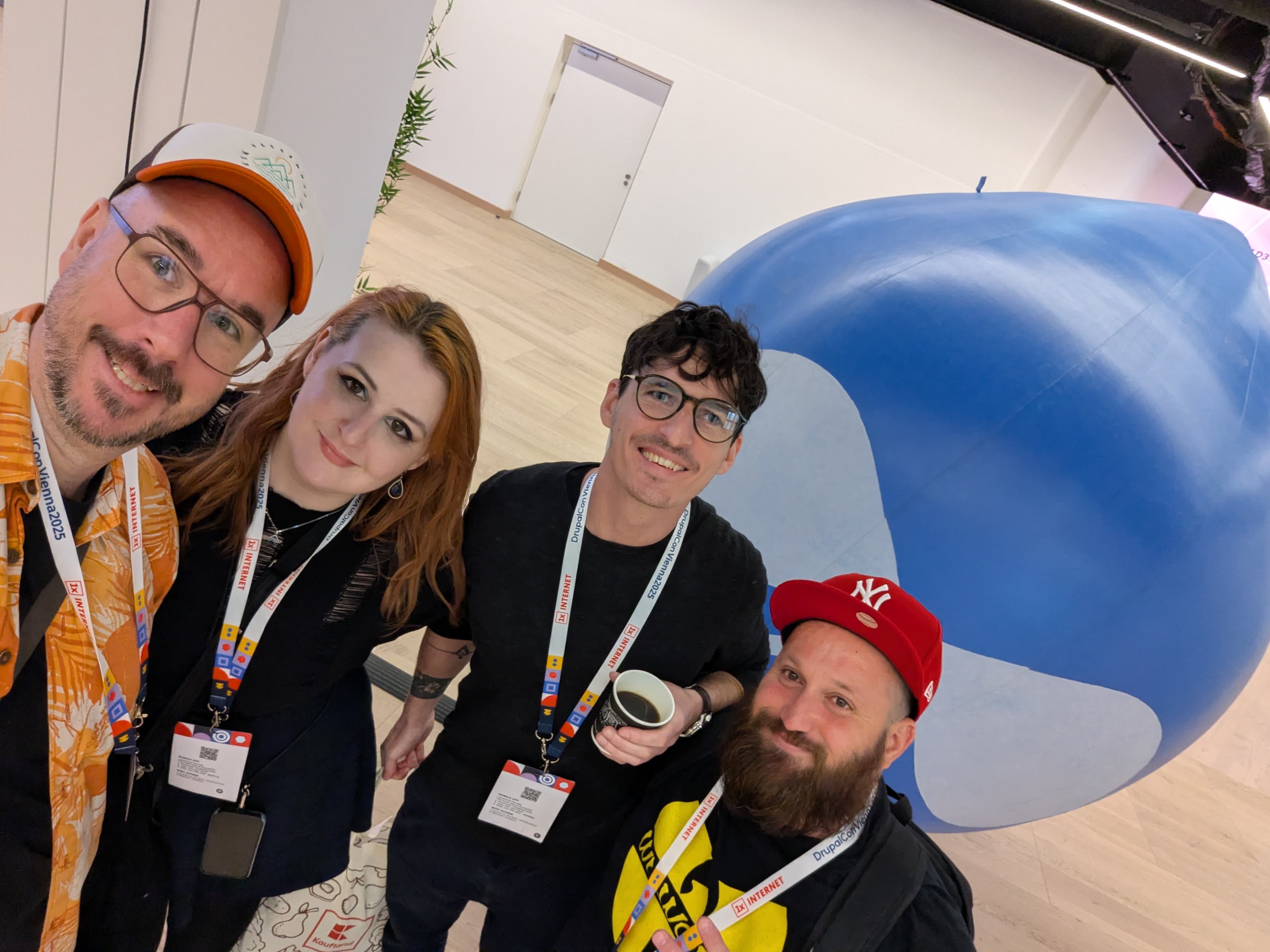

After a few quiet years, the Drupal community is coming back to life, and nowhere was that more evident than at DrupalCon 2025 in Vienna. The annual flagship event brings together developers, designers, strategists, and open source enthusiasts from across the globe to celebrate the power and potential of Drupal. More than just a conference, DrupalCon represents a renewed sense of momentum, fuelled by the return of local DrupalCamps, meetups, and community initiatives that had gone dormant during the pandemic years. This year’s gathering in Vienna is not only about code or CMS evolution; it is about reconnection, collaboration, and rediscovering the energy that makes Drupal thrive.
DriesNote: A new chapter for Drupal - delivering richer, faster digital experiences
Dries Buytaert’s keynote set the tone with a vision that places Drupal at the heart of modern, composable web development. His focus on Drupal Canvas and its growing integration with modern design and development workflows signals a bold step toward bridging the gap between design and code.
One of the most exciting announcements was the Figma MCP server integration with Drupal Canvas. This integration allows seamless syncing between Figma components and Drupal’s new Canvas environment, enabling teams to move from design to implementation faster and with greater consistency. By connecting the design layer directly to the Drupal ecosystem, site builders and designers can now collaborate in real time, cutting down the gap between concept and deployment.
Another emerging theme was automation. The introduction of Autonomous Drupal Agents and the Orchestration module showcases how Drupal is starting to embrace intelligent automation, whether for content workflows, infrastructure tasks, or CI/CD processes. Tools like Activepieces, an open source alternative to n8n, highlight how the community is aligning around open, extensible automation frameworks.
For engineering managers, this opens up new opportunities to streamline operations, reduce manual overhead, and empower non-technical users to participate more directly in digital delivery.
Drupal Canvas unleashed: The future of Drupal is here
The technical sessions went deeper into how Drupal Canvas is reshaping the development landscape. The Canvas CLI and the ability to sync components between Canvas and the code repository make it a powerful bridge between Drupal and modern JavaScript tooling. With WebAssembly and Speedy Web Compiler enabling JSX components to run directly in the browser without the need for Node.js, Drupal is stepping confidently into a future where front-end flexibility meets open source reliability.
Projects like TailwindCSS in the browser and the Canvas SSR tools are making it easier than ever to build, preview, and iterate quickly. For engineering teams like ours that serve charities and mission-driven organisations, this means we can deliver richer, faster digital experiences without sacrificing maintainability or accessibility.
Drupal: now and beyond
While the technical advances were impressive, what stood out most was the renewed energy across the community. Talks like “How to efficiently use AI to speed up infrastructure management and app deployment” and “Strategies for integrating Drupal Canvas in your existing platform” reflected a broader vision: Drupal is evolving into a hub for innovation, where AI, automation, and modern front-end frameworks converge.
There was even an honest reflection on the past, with sessions such as “Why we left Drupal, tried Storyblok, and what happened next” reminding everyone that experimentation and learning from other ecosystems only make Drupal stronger.
A reinvigorated community
For those of us building digital platforms for charities and non-profits, this resurgence matters. Drupal’s flexibility, accessibility, and community-driven ethos align perfectly with the values of the sector. With the return of DrupalCamps, local meetups, and a thriving global event scene, it feels like the community heartbeat is back.
As we return from Vienna, one thing is clear: Drupal’s future is composable, collaborative, and alive with possibilities. The innovations unveiled at DrupalCon 2025 prove that the platform is not only keeping pace with modern development practices—it’s helping define them.
Our commitment to purposeful digital experiences
manifesto are the digital experience agency for changemakers. We are committed to delivering purposeful and positive impact for people, planet, and society. We take pride in creating award-winning digital experiences, products, and services that are measurably ethical, inclusive, accessible, sustainable, and joyful. The progress we saw at DrupalCon Vienna reinforces why we continue to invest in open source technologies like Drupal, because when innovation is shared, everyone benefits.