

Client story | Membership | BACP
I might ban the word transformation": Year One with BACP
The British Association for Counselling and Psychotherapy (BACP) is one year into a three-year partnership with Manifesto to rebuild its digital ecosystem: website, CRM, data, UX research and organisational change. Here, Chief Experience Officer Ben Kay shares what that first year really involved, including the low points, the full pivot and what he'd tell any leader about to start.
A live case study for getting digital change funded, backed and delivered
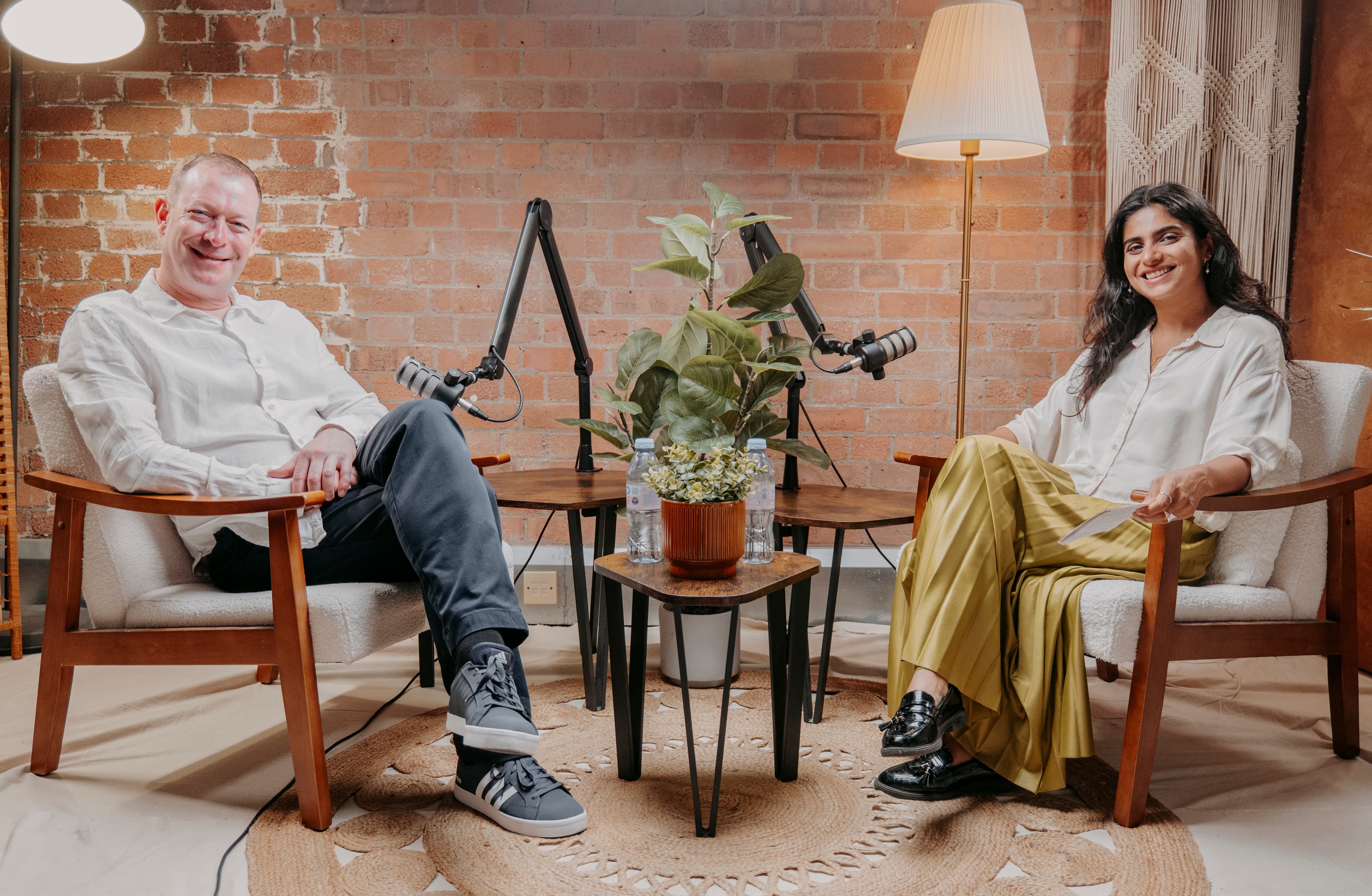
Featuring Ben Kay, Chief Experience Officer, BACP, in conversation with Arushi Kumar, Senior Strategist, Manifesto. Watch the full 38-minute conversation
|
Client |
British Association for Counselling and Psychotherapy (BACP) |
|
Sector |
Membership body and registered charity |
|
Who BACP serves |
76,000 members (counsellors and psychotherapists) and the public seeking therapy |
|
Partnership |
Three years; Year One complete |
|
Year One scope |
Website discovery, design and build; CRM replacement; UX and audience research; data strategy; customer proposition; organisational change |
|
Featuring |
Ben Kay, Chief Experience Officer, BACP |
Episode menu
Episode 1 - The visionary leader
Episode 2 - Member-centric design
Episode 3 - The transformation blueprint
Episode 4 - The inescapable pivot
Episode 5 - Partnership in practice
Five things BACP learned in Year One
- A new website is not digital transformation. It's one output of an organisation deciding who it serves and how.
- Old requirements are not user needs. Pent-up internal demand has to be tested against what members actually want.
- Boards and staff need short-term wins. A multi-year vision only holds if people can see progress along the way.
- Fixing the foundations can't always wait. BACP brought its CRM replacement forward from Year Two or Three, and it became the programme's turning point.
- Partnership means challenge. The most valuable moments came when Manifesto pushed back, not when their team agreed.
It started with "we need a new website"
BACP exists to improve the mental health of the nation. It supports 76,000 counsellors and psychotherapists and helps the public find therapy they can trust. Behind that sits a roughly 180-person organisation running a busy daily operation on technology that has been built on, layer by layer, for years.
The original brief was simple: a new website. But as Ben Kay puts it, building a website is the easy bit. The real work is being clear about who BACP wants to be, who it wants to engage, and how every experience, online or offline, is designed around what it knows about those audiences.
So in 2025 BACP and Manifesto began a three-year partnership covering the website, the CRM, data, research and the organisation itself. This film is the second in a series following that work. The first introduced the partnership. This one covers what Year One actually taught both teams.
"We need a new website. That's not digital transformation, by the way. Building a website is the easy bit." Ben Kay, Chief Experience Officer, BACP
Episode 1 | The visionary leader
Why did BACP decide it needed more than a new website?
Ben has led change programmes before, and he isn't a fan of the word "transformation". To him it implies a clear destination and a fixed route. BACP's reality has been different: the roadmap has been redrawn several times as the team learned more.
That's partly why his role is framed around experience. The goal isn't to finish a project. It's to build an organisation that keeps adapting to what members, the public and society need next.
"Transformation is steeped in so much expectation and perhaps misconception. I might ban the word." Ben Kay
What you can take from this
- Frame the programme as ongoing organisational change, not a project with an end date. It sets more honest expectations with your Board.
- Treat the website as an output of deciding who you serve, not as the goal.
- Expect the roadmap to change, and plan the governance to cope with that.
Episode 2 | Member-centric design
How do you move from internal requirements to what members actually need?
When BACP announced a rebuild, years of pent-up demand arrived at once. Legacy systems had left staff little room to test and iterate, so the only users they heard from regularly were each other. Some requirements on the list were five years old.
Every request was valid. But Manifesto's role was to ask a harder question: is this what your users want? Discovery research with members and the public became the filter for what got built.
"Everyone's got an idea of what a website needs to look like. But ultimately, you've got to go and ask the people who are going to use it." Ben Kay
What you can take from this
- Expect a flood of backlogged requests the moment you announce a rebuild, and have a way to triage them.
- Test inherited requirements against real user research before they enter the backlog.
- Give staff a way to hear directly from members, not just from colleagues.
Episode 3 | The transformation blueprint
How do you keep a multi-year programme backed when the Board wants results now?
This is the biggest investment BACP has made in changing the organisation, and it relies on the Board's trust. Meanwhile, teams still run a busy operation serving 76,000 members and hitting revenue targets. Ben describes a constant tension between blank-sheet thinking and keeping the day job going.
Aarushi pushed Ben to set shorter-term horizons so people could see progress. She also found that much of BACP's know-how lived in people, not documentation. Years of expertise and habit were built into processes and systems, and rebuilding meant carrying that heart forward, not erasing it.
"The website is just a website. It's a digital representation of the organisation, and we're changing as an organisation." Ben Kay
What you can take from this
- Pair the long-term vision with visible short-term wins. The new website is BACP's first.
- Budget time for undocumented legacy knowledge. It lives in people, not specs.
- Explain the why repeatedly. Most staff are focused on today's pressures, not the three-year picture.
Episode 4 | The inescapable pivot
What happens when your CRM plan collapses mid-programme?
Manifesto's strategy always started from the CRM up, but the CRM was scheduled for Year Two or Three. In sprint 3 of a 10-sprint plan, it became clear the existing platform couldn't support the future BACP needed. Carrying on would have done the programme a disservice.
Ben calls it his low point and his high point. The pivot affected timelines and cost, but it cleared the way to rethink processes and integrations from scratch. With a couple of weeks to re-plan, the team went back to its structured discovery research to decide what to build first.
"It forced me to make some difficult decisions, which, when I reflect, wasn't a difficult decision at all. It's the right decision." Ben Kay
What you can take from this
- Look at your core data platform early, even if replacing it is "later". It sets the ceiling for everything else.
- A thorough discovery phase pays off when you have to re-plan fast. It's your evidence base.
- Don't present new technology as the cure-all. It enables change; people and process deliver it.
Episode 5 | Partnership in practice
What makes a transformation partnership work beyond Year One?
From the pitch onwards, Ben said he wanted a partner, not a supplier. In practice, he treats the Manifesto team as an extension of his own: same courtesy, same openness, same expectation of challenge. Arushi credits BACP's trust and transparency for letting the team do its best work.
They have disagreed, mainly about how hard to push people through change in a 180-person organisation where everyone is at a different point on the change curve. Ben calls it constructive challenge, and says it changed his approach.
"I'm not looking for a supplier. I'm not looking for someone I can throw things over the wall to." Ben Kay
What you can take from this
- Share context openly with your partner. They can only help as much as they know.
- Value the partner who challenges you, and make it safe for them to do so.
- Meet people where they are on the change curve. A single change message won't land for everyone.
Watch the full conversation
Ben Kay and Aarushi Kumar reflect on the highs, the lows and what's next, in 38 minutes.
Coming next: Year Two
BACP enters Year Two with momentum and a new foundation. Ben is exploring BACP's positioning, content, audiences, and the role technology and data play in member experience. He's also clear that after five years of organisational change, the Board, staff and members need to see results.
FAQs
Is a new website the same as digital transformation?
No. At BACP, the website is one output of wider change: deciding who the organisation serves and designing every experience around them. Ben Kay calls the website "the easy bit". The harder work is in the CRM, data, processes and culture behind it.
How long does digital transformation take for a membership organisation?
BACP committed to a three-year partnership, but Ben argues there's no final destination. Member and public needs keep changing, so the aim is an organisation, platform and culture that can adapt continuously. Expect the roadmap to change as you learn.
Should you replace your CRM before or after your website?
BACP planned the website first and the CRM in Year Two or Three. Early in delivery it became clear the existing CRM couldn't support the future the programme needed, so the replacement was brought forward. Assess your core data platform early, even if replacing it is planned for later.
How do you keep Board support for a multi-year programme?
BACP paired a long-term vision with shorter-term milestones staff and the Board could see. The new website was framed as one of those milestones, a visible win on a longer path. Regularly explaining the why also helped.
What's the difference between a digital partner and a supplier?
Ben describes the Manifesto team as an extension of his own. He shares context openly and expects challenge in return. A supplier delivers what's handed over; a partner questions whether it's the right thing to build.
More membership stories
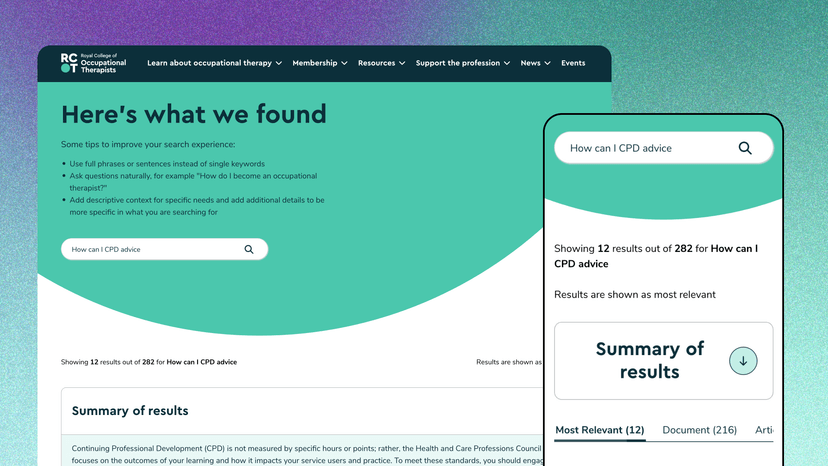
Using AI search to enhance resource discovery
with Royal College of Occupational Therapists (RCOT)Website search abandonment reduced by connecting members directly to vital resources.
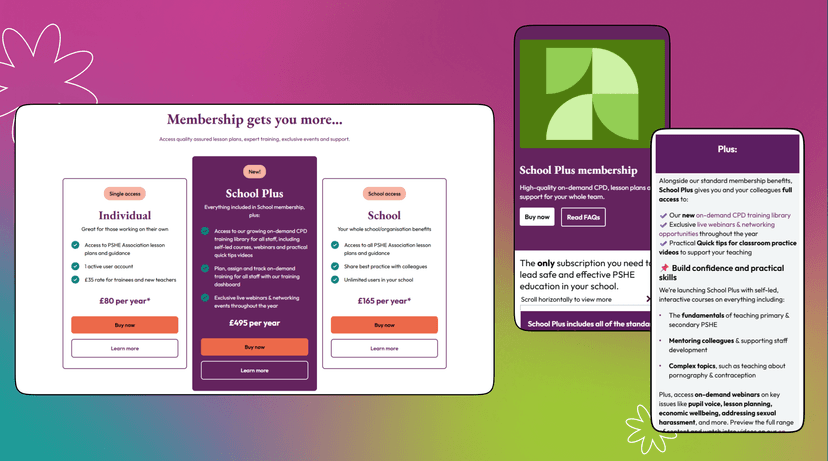
Building a flexible membership experience with engagement at its core
with PSHE AssociationMembershipExperienceWe partnered with PSHE Association to enhance their online membership by introducing a new "School Plus" tier and improving tools for tracking user progress

Helping digital experiences bloom
with KewExperienceMembershipRoyal Botanic Gardens, Kew engaged manifesto as their digital development partner, to build a new website with enhanced digital experiences for Kew’s diverse audiences.