We deliver AI strategy and adoption consultancy for purpose-led organisations. We help you decide what AI is actually for in your organisation and, together, turn that into a roadmap you can fund and govern. Then we build the workflows, interfaces, models and capabilities that matter.
Our clients
Why AI activity stalls before it becomes strategy
The problem with AI isn't a lack of enthusiasm. McKinsey's 2025 State of AI survey found 88% of organisations use AI in at least one function, but only 7% have scaled it across the whole organisation.
- Nobody can say where the value actually is, so prioritisation stalls. Long lists of ideas with no shared method for weighing value against effort and risk. AI use case prioritisation unblocks everything downstream.
- The data is fragmented, so anything ambitious fails a feasibility test. Supporter, member, visitor and student records sit in separate systems. The applications worth doing get deferred and the organisation is left with a chatbot.
- No policy means no sign-off. Many organisations have no AI policy at all, so boards are asked to sign off proposals with no risk framing, and the honest answer is ‘no’.
- These are AI adoption challenges, not technology problems. This is why we start with strategy before tooling.
How our AI strategy and adoption services turn experiments into results
We treat AI as one connected capability spanning strategy, experience and engineering.
How we assess AI readiness
AI readiness is how far an organisation has moved from informal experimentation towards governed, embedded use. We assess it across five dimensions: strategy and leadership alignment, data and technical foundations, governance and risk, skills and confidence, and delivery capacity.
In the opening sprints of AI Wayfinder, we conduct stakeholder interviews, a staff survey and a review of your current data and systems, to produce a scored current-state picture leadership can agree on before anyone discusses solutions.
If you want an indicative position first, our two-minute tool gives you a readiness score and suggested next steps:
Start with AI Wayfinder
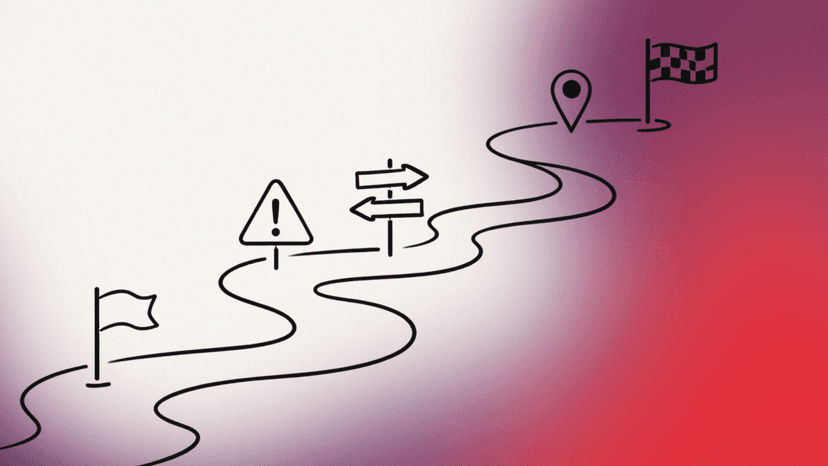
AI Wayfinder is our entry point for AI strategy consulting and adoption work: a 10-week programme across five sprints, taking you from scattered or stalled activity to an AI strategy roadmap your board will back. It works equally well for organisations with no AI activity yet, and those with pockets of experimentation that have not added up to anything coherent.
You finish with a board-ready strategy grounded in your actual context, a prioritised experiment portfolio focused on delivering real value, a practical governance framework and a shared AI language.
"I reckon Wayfinder pushed us forward by at least six months. That combination of AI expertise and deep sector knowledge isn't something we could have generated internally. We now have a real plan — not one or two experiments, but a portfolio of experiments I genuinely believe will transform how we deliver our mission over the next couple of years." Ben Sykes, Head of Digital, Data and Innovation, Blood Cancer UK
Ready to scope your programme? Learn more about AI Wayfinder
Do you need AI strategy or AI adoption support first?
The two get confused, and starting in the wrong place wastes a budget cycle.
Governance that works in practice
Everybody talks about governance but few say what it consists of.
A policy document is not governance. "Use AI responsibly" doesn’t help anybody make a decision. A usable AI governance framework names the approved tools, the data that must never go into them, where human review is mandatory, who signs off a new use case, and what happens when something goes wrong.
It has to be specific about the hard cases: safeguarding notes, health data, student welfare disclosures and donor financial detail carry different risks from drafting a funding bid.
Trustees are accountable, so we equip them with the questions to ask, and provide a proposal format that answers them: use case, data and lawful basis, risks and mitigations, cost, review date.
Results for our clients
40% increase in leadership confidence in AI direction
Blood Cancer UK had scattered AI activity with no plan connecting it to strategy. An AI Wayfinder engagement turned that into a governed roadmap of 8+ prioritised experiments.
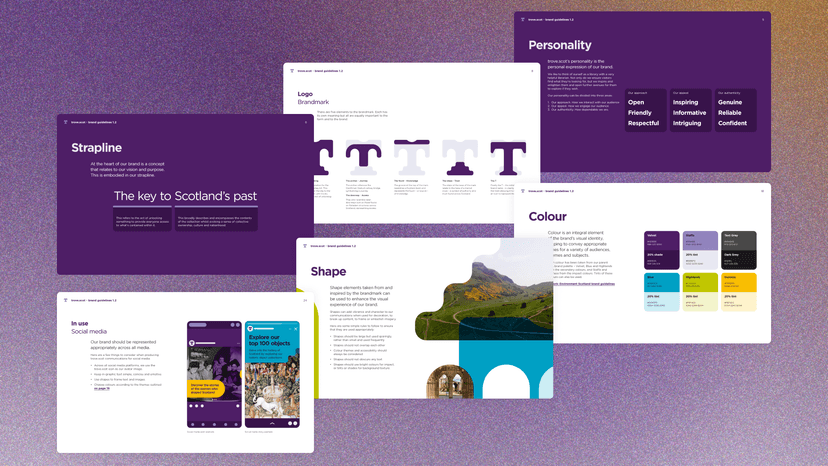
3 million heritage records unified in one search
Users had to jump between four or five separate websites to find anything. We built trove.scot: a single discovery platform with machine-learning-cleaned metadata, map and keyword search.
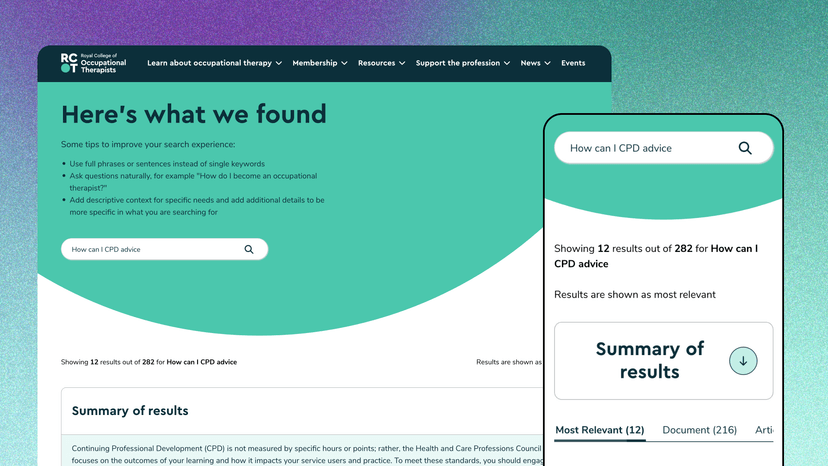
28% increase in average click position
AI-enabled search surfaced the right resource at the point of need, rather than leaving members to hunt through a library
Who we work with
We work with purpose-led organisations at every stage of AI adoption.
Charities and non-profits
- AI strategies tied to your aspirations for beneficiaries and supporters
- AI-powered personalisation for supporter engagement and fundraising
- Drafting and research support for bid and case-for-support teams
- AI-enabled digital products and services, built around safeguarding obligations
Museums, culture and visitor attractions
- Collections discovery: machine learning to normalise metadata and make holdings findable
- Audience segmentation and personalised visitor journeys
- Access and interpretation, including translation and alternative formats
- A clear institutional position on generative AI in curatorial and creative work
Higher Education
- Student-facing services: admissions enquiries, timetabling and welfare triage
- A defensible institutional position on academic integrity, settled before deployment
- Joining student records, CRM and VLE data into one view
- Staff capability building and AI literacy across professional services
Membership organisations
- Renewal prediction and churn risk modelling
- Personalised member journeys and lifecycle communications
- Knowledge management and AI-enabled search across member resources
- Unifying the member record across CRM, AMS, events, finance and email
Public sector and wider purpose-led organisations
- Service design and delivery against the Digital Scotland Service Standard, through Discovery, Alpha and Beta
- Transparency about automated decisions, for regulators and the public
- Procurement-ready business cases and risk documentation
- Workflow automation for stretched operational teams
Why choose manifesto as your AI strategy and adoption partner?
Human-supervised by default
We don't design systems that make consequential decisions about a supporter, member, student or beneficiary without a person in the loop. Where AI drafts, a human approves.
Responsible AI adoption from the first sprint
Ethics, accessibility and risk are part of sprint two, not a review at the end. We agree principles with you before
Secure and lawful with sensitive data
We are explicit about what data goes where, which models are hosted under what terms, and what the lawful basis is. Where a use case shouldn't proceed, we say so.
Capability handed over, not retained
Blood Cancer UK's digital team has the confidence to run its first wave experiments in-house and that’s the outcome we design for.
Talk to us about your AI ambitions
Scattered pilots, board pressure, or no plan at all? Let's start with a 30-minute, no-obligation conversation about your AI and data estate. No sales pitch.
Ready to talk about what AI could do for your mission?
Explore the rest of our offer
AI strategy and adoption is one part of what we do. Here's where the rest of our services live.
Strategic consulting
StrategyTechnology to scale your impact
TechnologyCX and engagement
CX and engagementGrowth marketing
From our thinking
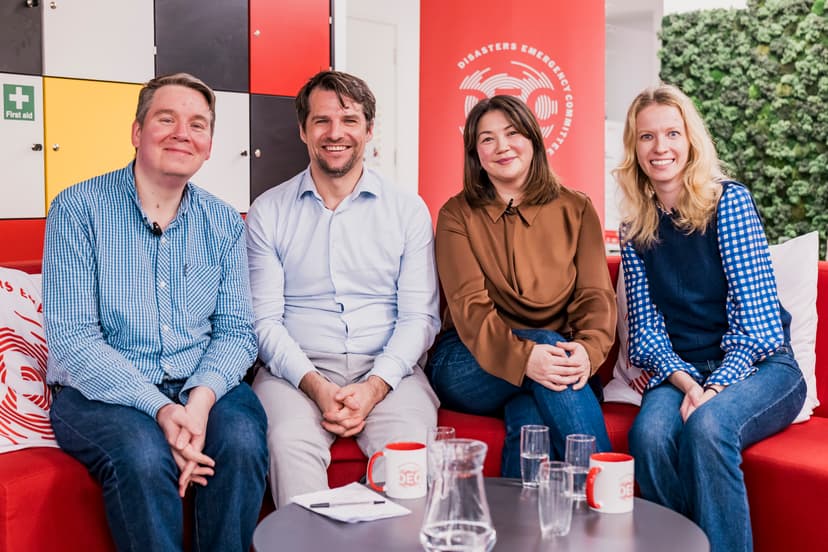
What should AI do? Moving from shiny tools to strategic bets for purpose-led organisations
Louise Lai shares insights and practical actions from a recent AI inspiration day hosted by Disasters Emergency Committee

Navigating the AI agent landscape
We consider the role AI agents will have in the future world of work within an organisation and some of the benefits and risks for an organisation.
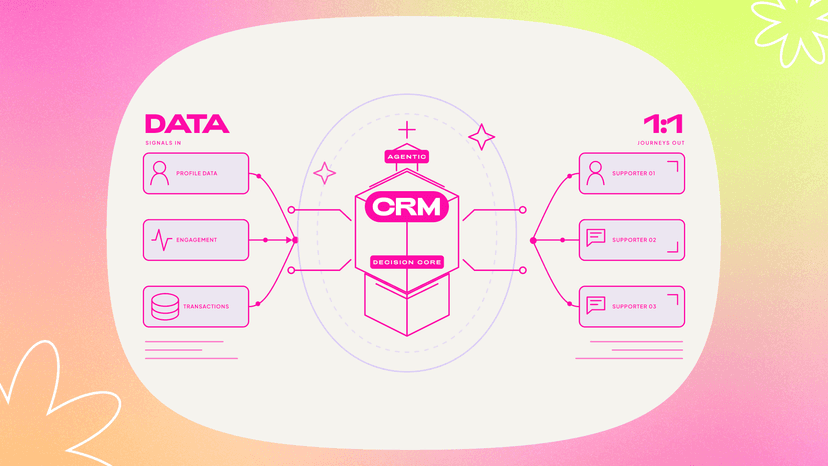
Agentic customer journeys
How agentic AI is changing supporter experience, and what the charity sector needs to do about it
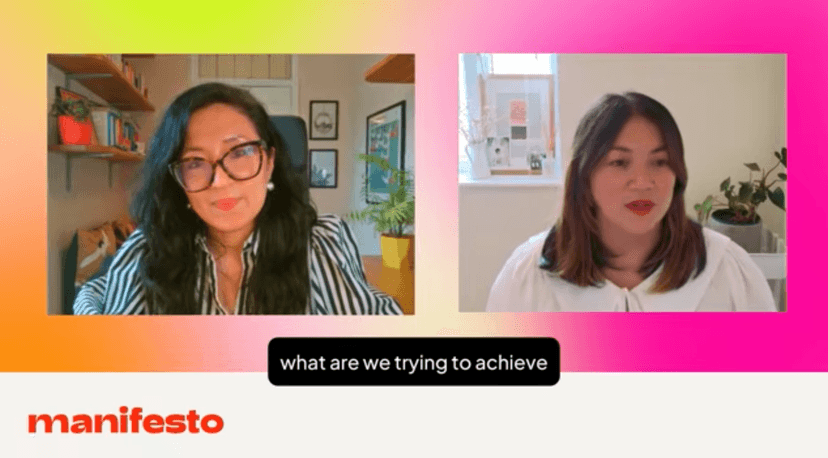
Navigating AI, strategy, and skills: Key large charity takeaways from the Charity Digital Skills Report
Lou Lai & Zoe Amar unpack key AI and strategy insights from the Charity Digital Skills Report.
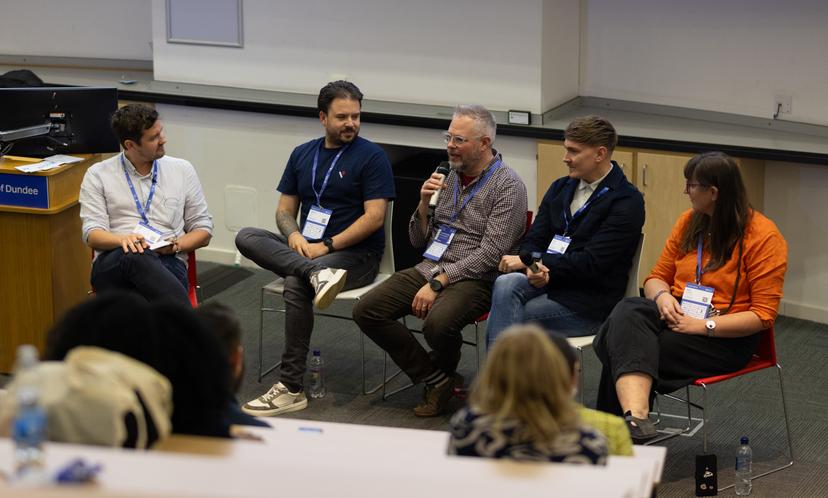
Beyond the hype: How higher education navigates search, structure, and human trust in the age of AI
Hugh James reflects on the digital panel he recently moderated at the Scottish Web Folk conference
Frequently asked questions
What does AI strategy consultancy deliver?
AI strategy consultancy helps an organisation decide where AI is worth using, assesses whether its data, systems and skills can support that, sets the governance and sequences the work into a funded roadmap. We run this through AI Wayfinder, a 10-week programme across five sprints.
How long does an AI strategy engagement take?
AI Wayfinder takes 10 weeks across five sprints, from orientation to a board-ready roadmap. This begins with a maturity assessment that takes two to three weeks and gives you a current-state picture and defensible next steps. Delivery of the roadmap itself runs in monthly sprints.
What is the difference between AI strategy and AI adoption?
AI strategy decides what AI is for and in what order it happens. AI adoption makes it stick: training, internal champions, governance that fits real workflows, and change management. Organisations with no plan need strategy first. Organisations with a plan nobody follows need adoption support.
What is the difference between AI transformation and digital transformation?
AI transformation is not a separate programme. It is the same work with a new set of capabilities in it: the same data foundations, integration challenges, governance and change management. Run as a standalone initiative, AI adds another disconnected system to the ones you already can't join up.
What should an AI policy cover?
A usable AI policy names the approved tools, states what data must never be entered into them, defines where human review is mandatory, sets out who approves a new use case and against what criteria, and says what happens when something goes wrong. Anything vaguer gives staff no decision they can act on.
What should trustees ask before approving an AI proposal?
What is the use case and who benefits? What data does it use and what is the lawful basis? What are the risks and the mitigations? Who is accountable if it goes wrong? What does it cost, and when do we review it? A proposal that can't answer all five isn't ready.
Do we need to fix our data before starting with AI?
Not entirely, but you need to know its condition. Data quality sets the ceiling on what AI can do, so we assess it early and sequence around it. Low-risk work usually proceeds immediately while the foundations improve in parallel.
Which sectors do you specialise in?
We work with museums, visitor attractions, universities, membership organisations and public sector bodies as well as charities. The common factor is a purpose-led mission, sensitive audience data, and accountability to a board, funder or regulator.