Every day, the bar for digital experiences is raised - not by other non-profits, but by commercial brands. Whether it’s pausing a subscription on HelloFresh, receiving custom recommendations on Netflix, or getting an instant ride update from Uber, your supporters are experiencing hyper-personalised, frictionless interactions everywhere else.
Meanwhile, much of the charity sector remains stuck using outdated models, struggling to deliver the level of personalisation and responsiveness supporters now expect.
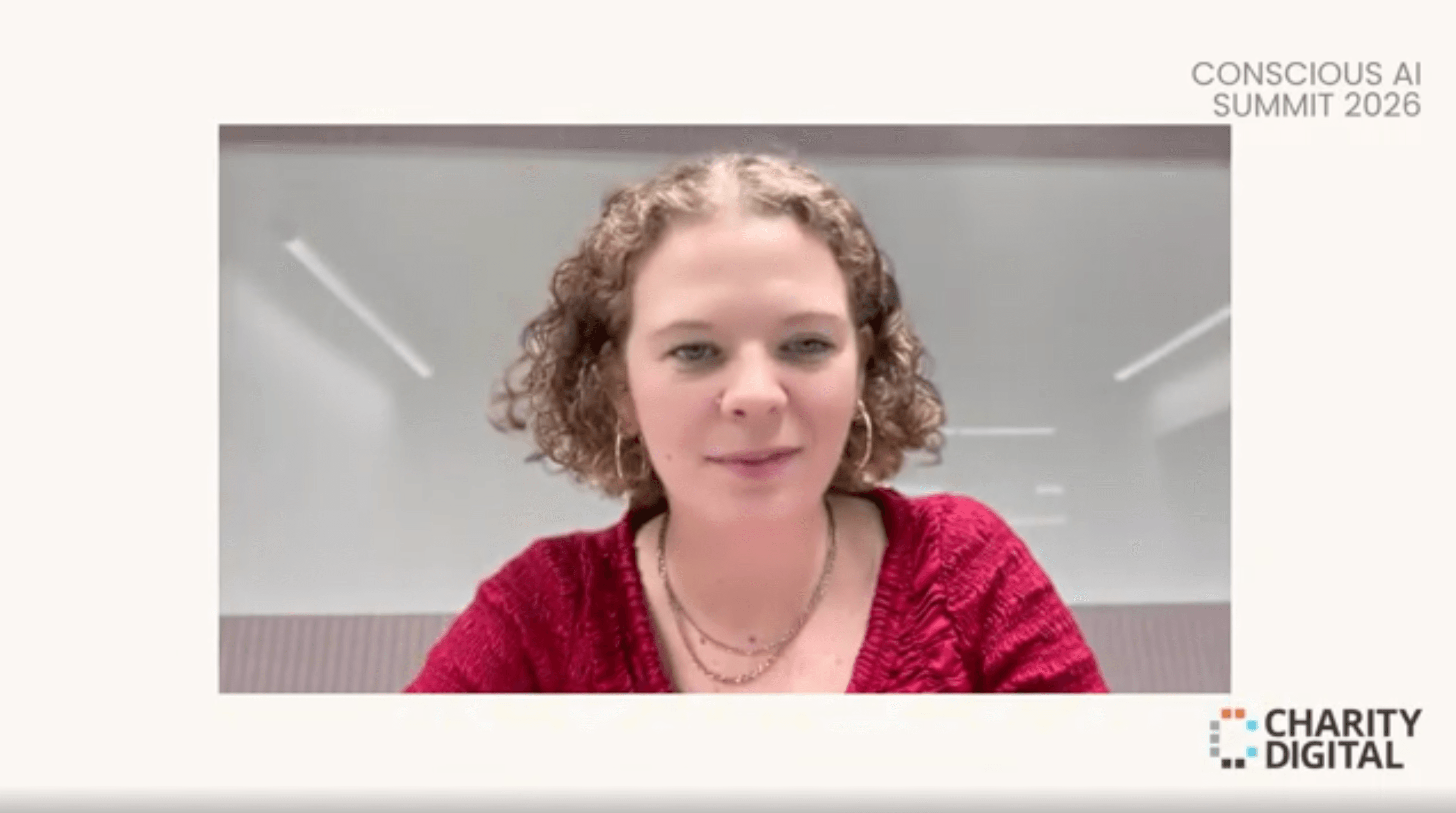
Speaking at the Charity Digital Conscious AI Summit, Lou Barton, Principal Consultant for Customer Experience and Engagement at Manifesto, tackled this critical gap head-on. She posed a fundamental question for the sector: Is the future of supporter experience and fundraising agentic?
The reality: Mind the Engagement Gap
Drawing from Manifesto’s Mind the Engagement Gap report and more recent sector research - surveying over 2,000 supporters and 300 charities - Lou highlighted a clear picture of where non-profits stand today:
- Supporters know what they want: 90% of supporters say knowing their gift reaches the cause builds the trust required to stay loyal. They want control over communication frequency, clear proof of impact, and relevant messaging.
- The sector-wide data gap: Despite these clear expectations, only 3% of charities have a single, unified view of a supporter’s history linked to their record. Just 30% capture motivational data, and a mere 22% record specific preferences beyond a blanket opt-in.
- The cost of over-asking: 64% of current supporters who say they won’t give again cite being asked too forcefully, too soon, or too often. Furthermore, 35% of lapsed supporters stopped giving for the exact same reason.
Supporters aren't being mysterious about what they need—they are explicitly telling us. However, rigid campaign setups and fragmented data structures prevent charities from responding effectively.
From static journeys to agentic decision-making
To understand where the sector is heading, Lou outlined how donor journeys have evolved over time:
- Journeys 1.0 (Early 2000s): "Batch and blast" emails sent to a single, unsegmented list.
- Journeys 2.0 (2010s–Present): Fixed decision-tree journeys. While step-based sequences and branching rules (A/B testing, static segmentation) added value, they remain rigid, complex to set up, and difficult to scale without errors.
- Journeys 3.0 (The Agentic Frontier): 1-to-1 decision-making driven by AI agents evaluating real-time supporter signals.
What is an "Agentic" System?
An agentic AI system isn't an autonomous bot writing unvetted emails directly to your donors. Instead, it is a decision-making system given an objective, a strict set of boundary rules, and a pre-approved menu of human-written content.
Instead of forcing a donor through a pre-mapped 5-step email workflow, an Agentic System evaluates all available signals:
-
Lifecycle & state: Are they brand new, a repeat donor, or at risk of lapsing?
-
Engagement patterns: Which channels do they prefer? When do they usually open messages?
-
Non-financial actions: Have they signed petitions, volunteered, or campaigned?
-
Motivations: What specific cause area or campaign drove their first gift?
Using these signals, the agent selects the optimal piece of approved content, chooses the ideal time and channel, and executes the contact - continuously learning from the outcome to refine future decisions.
Governance first: Safeguarding your supporters
Adopting AI in the charity sector requires a conscious approach. Lou emphasised that agentic decisioning must operate within strict guardrails:
-
The "second brain" concept: Content, tone guides, brand rules, and best-practice frameworks sit within a knowledge hub (e.g., tools like Obsidian or secure data warehouses). The AI selects from pre-vetted human messaging rather than generating rogue text.
-
Hard caps & policy mandates: Strict regulatory rules must be hardcoded into the agent - ensuring vulnerable supporters, recent re-ask exclusions, or specific opt-outs are strictly respected.
-
Full audit trails & surveillance: Every automated decision must be logged so teams can review why the agent chose a specific message, test decisions in "shadow mode" before going live, and monitor performance across demographic segments.
3 Practical Steps to Start Safely
Transitioning towards intelligent, agentic supporter experiences doesn't require an overnight overhaul. Lou outlined three actionable steps non-profits can take today:
- Fix your data foundations: Address the "rubbish in, rubbish out" principle. Focus immediately on tying key engagement signals, channel preferences, and donor motivations back to a single unified customer record.
- Build your knowledge menu: Organise your existing high-performing content, email templates, case studies, and brand rules into a centralised repository ("Second Brain").
- Experiment in shadow mode: Run agentic decision engines in the background without sending live messages. Compare the AI’s decisions against what your team would manually pick, critique the outputs, and refine the logic before launching real-world campaigns.
Watch the full talk
Want to learn more about the technical workflows, data architecture, and detailed Q&A on how both small and large charities can leverage agentic AI?
📺 Watch Lou Barton’s full presentation from the Charity Digital Conscious AI Summit on YouTube to discover how you can start designing a preferable future for your supporter experience!